
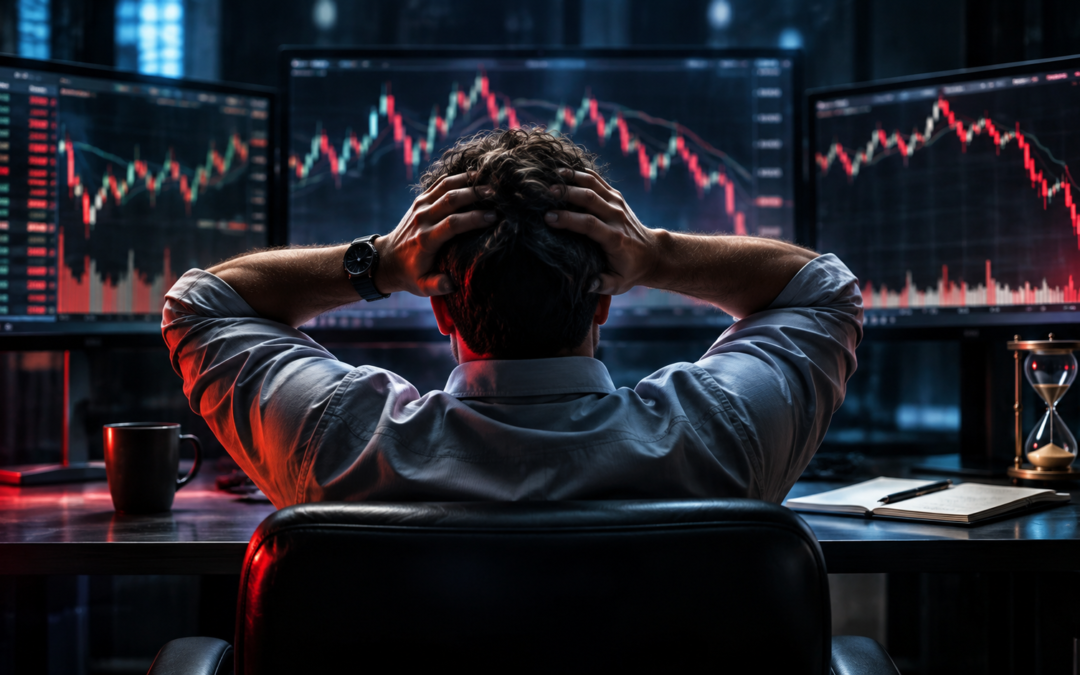
The Hidden Trap: Understanding the Dangers of Emotional Trading
In the world of financial markets, charts, algorithms and fundamental data often receive the credit for market movements. Yet behind many catastrophic trading losses and sudden market downturns lies another powerful and unpredictable force: human psychology.
Emotional trading occurs when financial decisions are driven by fear, greed, hope, panic or overconfidence rather than a disciplined trading strategy.
Whether trading stocks, foreign exchange or cryptocurrency, traders who fail to manage their emotions can fall victim to predictable psychological traps that undermine their long-term financial objectives.
Understanding these behaviours is an essential step towards developing a more disciplined and sustainable approach to trading.
The Psychological Engine: Fear and Greed
At the core of emotional trading are two fundamental human emotions: fear and greed.
These responses served our ancestors well from an evolutionary perspective, triggering fight-or-flight reactions in situations involving physical danger. In modern financial markets, however, these same instincts can become destructive influences on decision-making.
1. Greed and the Fear of Missing Out (FOMO)
When markets surge, greed can take control.
Watching an asset increase rapidly in value can trigger an intense fear of missing out (FOMO). Rational analysis is abandoned as traders rush to buy near the top of a market movement, convincing themselves that prices will continue climbing indefinitely.
The belief that “this time is different” often encourages speculative behaviour.
Such activity can contribute to speculative bubbles, leaving emotionally driven traders exposed when the inevitable market correction arrives.
2. Panic and Loss Aversion
Conversely, when markets decline or a trade moves into negative territory, fear can take over.
Psychologists Daniel Kahneman and Amos Tversky demonstrated through prospect theory that people generally experience the pain of a loss more intensely than the pleasure of an equivalent gain.
This psychological tendency, known as loss aversion, can trigger two particularly dangerous behaviours:
Panic Selling
Selling otherwise sound assets at the bottom of a market movement because of the fear that prices will continue falling.
Hope and Paralysis
Refusing to close a losing trade because of the hope that the market will recover. A manageable mistake can gradually develop into a substantial loss because accepting defeat becomes emotionally difficult.
The Common Pitfalls of Emotional Decision-Making
When emotions dictate trading decisions, traders repeatedly fall into recognisable behavioural patterns.
The Emotional Trading Cycle
Emotional trading often follows a recurring psychological cycle:
Optimism → Euphoria → Anxiety → Denial → Panic → Capitulation → Depression → Hope → Relief → Optimism
Recognising this cycle can help traders understand how their emotional state influences their decisions throughout changing market conditions.
Revenge Trading
After experiencing a painful loss, an emotional trader may abandon established risk parameters in an attempt to win the money back immediately.
This behaviour, commonly known as revenge trading, often leads to oversized positions and unnecessarily high exposure, potentially compounding existing losses.
Confirmation Bias
Confirmation bias occurs when traders actively seek news, opinions, forums or analysis that supports their existing position while dismissing information that challenges their beliefs.
Rather than objectively assessing market conditions, they become emotionally attached to being right.
Analysis Paralysis
Over-analysing market movements and constantly searching for additional confirmation can create hesitation and missed opportunities.
Ironically, this prolonged uncertainty may eventually lead to impulsive and poorly timed trading decisions.
The True Cost: Compounding Destruction
The consequences of emotional trading extend far beyond an individual losing trade. Repeated emotional decisions can gradually undermine a trader’s financial position and personal well-being.
Capital Destruction
Panic selling, excessive leverage and poorly controlled risk can steadily erode trading capital, potentially destroying years of accumulated savings.
Erosion of Confidence
Repeatedly sabotaging trading decisions can create self-doubt, leading to chronic hesitation, inconsistent execution or eventually abandoning trading altogether.
Chronic Stress
Living through constant cycles of euphoria and despair can take a significant toll on mental health, sleep, personal relationships and overall well-being.
Building Armor: Strategies to Overcome Emotional Trading
Eliminating emotion entirely from trading is impossible. We are human, after all.
However, traders can develop structured systems and habits that minimise emotional interference and support more objective decision-making.
1. Adopt a Written Trading Plan
Define entry points, exit strategies and maximum risk tolerance before entering the market.
Establishing these parameters when your mind is clear helps reduce the temptation to make impulsive decisions during periods of market volatility.
Treat your trading plan as a commitment to yourself.
2. Automate Risk Management
Use appropriate stop-loss orders as part of a structured risk management strategy.
Predefined exit levels can help remove the emotional burden of deciding when to close a losing position and provide greater consistency in managing risk.
3. Size Positions Appropriately
If a single losing trade creates panic, your position size may be too large relative to your available capital and risk tolerance.
Trade with an appropriate level of exposure that allows you to withstand normal market fluctuations without threatening your financial stability.
4. Step Away from the Screen
Constantly monitoring positions can encourage obsessive behaviour and reactionary decision-making.
Establish specific times to review your trades and market conditions. Giving yourself distance from the screen can help protect your mental bandwidth and maintain perspective.
Conclusion: Discipline Over Emotion
Financial markets continually test a trader’s patience, discipline and ability to manage uncertainty.
Recognising how fear and greed can influence rational thought is an important step towards developing greater trading consistency.
By replacing impulsive reactions with structured planning, appropriate risk management and objective decision-making, traders can transform their approach from a stressful emotional rollercoaster into a more disciplined and sustainable practice.
Ultimately, successful trading is not simply about understanding the markets. It is also about understanding yourself.
The greatest trade you may ever learn to manage is the one against your own emotions.